
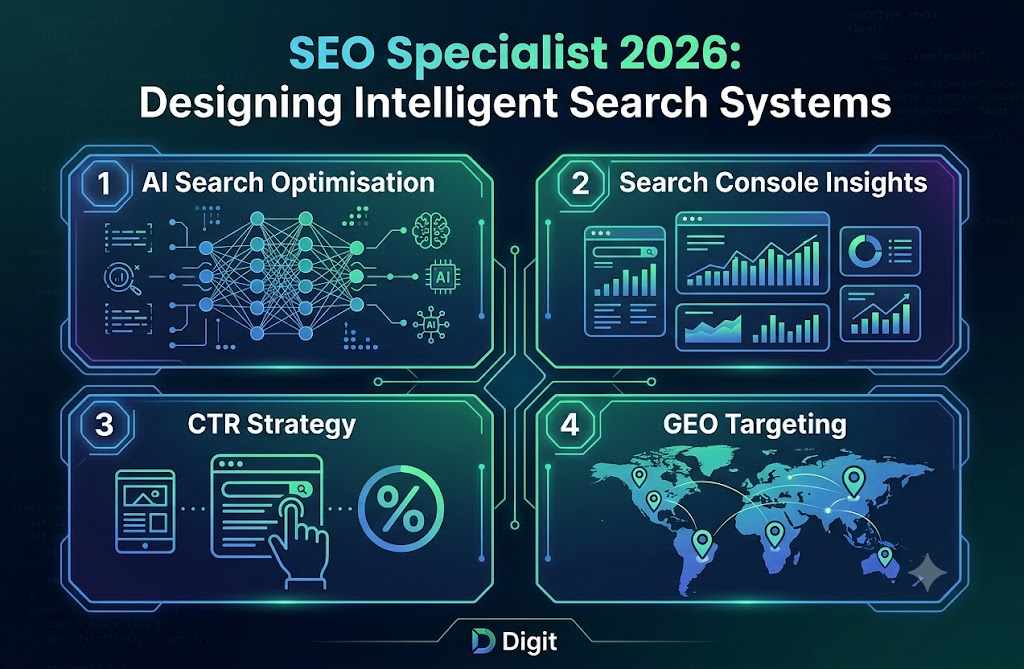
Search engine optimisation continues to evolve at a remarkable pace. As businesses compete for online visibility, the role of a search engine optimisation specialist has become more critical than ever. In 2026, successful SEO is not just about ranking for keywords—it also involves understanding search intent, analysing performance data, improving user engagement, and leveraging advanced GEO services to reach local and regional audiences.
Organisations that invest in modern SEO strategies are experiencing stronger brand visibility, higher website traffic, and improved customer acquisition. Whether you operate a local business or a global enterprise, understanding the latest SEO trends can provide a significant competitive advantage.
The New Era of Search Engine Optimisation
The SEO landscape in 2026 is shaped by artificial intelligence, user behaviour signals, and increasingly sophisticated search algorithms. Search engines now prioritise websites that provide valuable content, excellent user experiences, and trustworthy information.
A modern search engine optimisation specialist focuses on developing holistic strategies aligned with these ranking factors. Their objective is not only to improve search rankings but also to increase engagement, conversions, and long-term business growth.
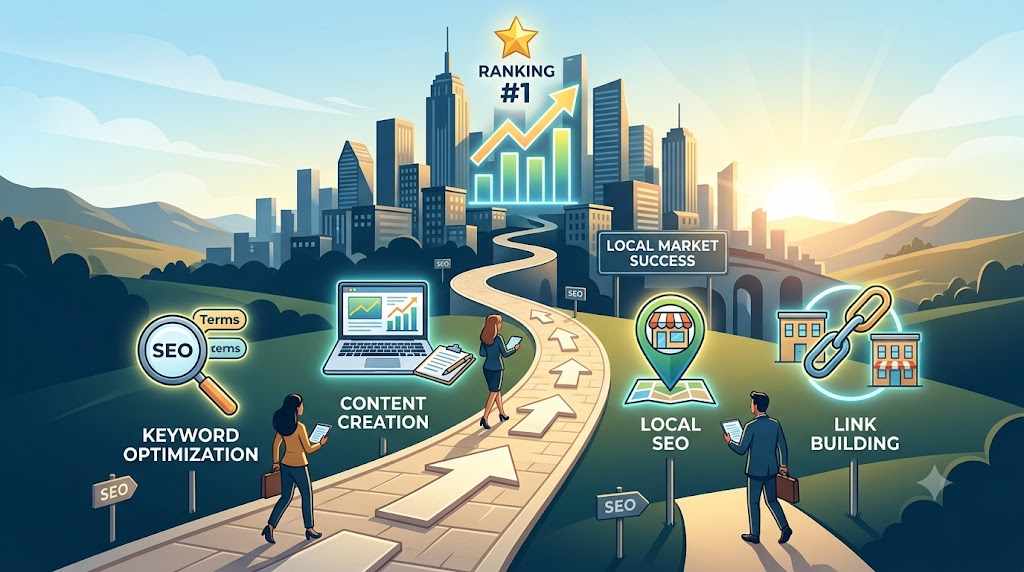
Today's SEO professionals combine technical expertise, content planning, data analysis, and local optimisation to deliver measurable results.
Why Businesses Need an SEO Specialist in 2026
Competition in digital markets continues to intensify. Millions of websites compete for attention, making it difficult for businesses to stand out without a strategic SEO approach.
An experienced SEO specialist helps organisations:
Increase organic visibility
Generate qualified website traffic
Improve website usability
Strengthen online credibility
Enhance conversion opportunities
Build sustainable growth channels
Unlike short-term advertising campaigns, SEO creates long-lasting benefits that continue generating traffic and leads over time.
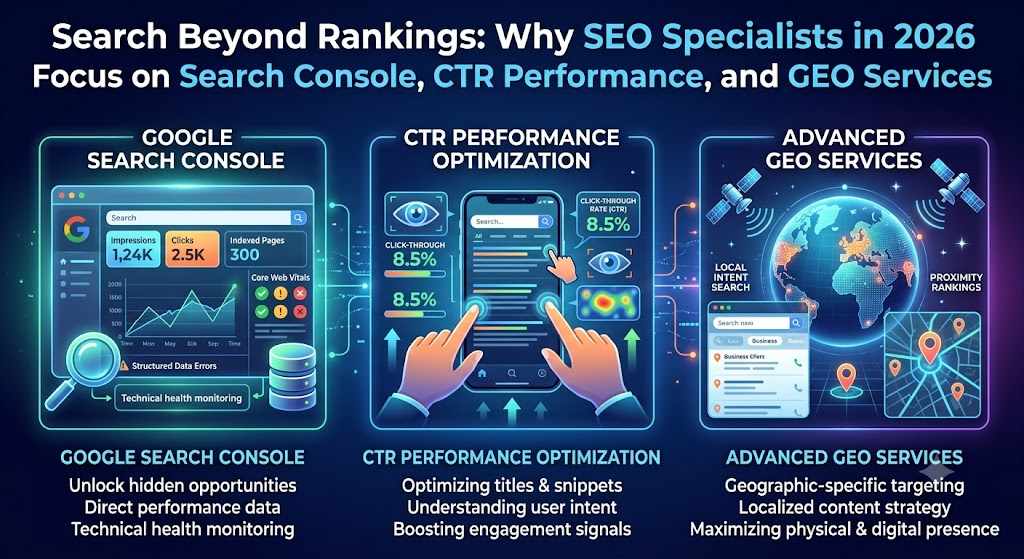
Search Console: The Foundation of Data-Driven SEO
Google Search Console remains one of the most valuable tools available to SEO professionals. It offers direct insights into how search engines view and interact with a website.
Tracking Website Performance
Search Console provides important metrics such as:
Total clicks
Search impressions
Average CTR
Average keyword position
These metrics allow SEO specialists to understand what is working and identify areas that need improvement.
Discovering Keyword Opportunities
Many websites rank for hundreds of search queries without targeting them directly. Search Console helps uncover these hidden opportunities, enabling specialists to optimise existing content for additional traffic.
For example, a page ranking in positions 8–15 may require only minor improvements to reach the first page and attract substantially more visitors.
Monitoring Technical Health
Technical issues can significantly impact search performance. Search Console helps identify:
Indexing errors
Mobile usability problems
Crawl issues
Security concerns
Structured data warnings
Resolving these problems ensures better search visibility and a smoother user experience.
CTR Optimisation: Turning Impressions into Clicks
One of the most overlooked SEO opportunities is improving click-through rate (CTR). A website can receive thousands of impressions but still miss valuable traffic if users choose competing search results.
CTR measures the percentage of users who click on a search listing after seeing it.
Why CTR Is Important
A higher CTR often results in:
More organic visitors
Better engagement signals
Improved brand awareness
Increased conversion opportunities
Search engines recognise user engagement patterns, making CTR an increasingly important performance indicator.
Effective CTR Optimisation Techniques
Create Compelling Titles
Titles play a major role in attracting clicks.
Strong titles often include:
Target keywords
Numbers
Questions
Clear benefits
For example:
"7 SEO Trends Every Business Should Follow in 2026"
is generally more appealing than:
"SEO Trends 2026"
Improve Meta Descriptions
Meta descriptions provide additional context and influence user decisions. Effective descriptions clearly communicate value while encouraging action.
Implement Rich Snippets
Structured data helps search engines display enhanced listings that stand out in search results.
Examples include:
Star ratings
FAQ sections
Product information
Event details
These features can significantly improve CTR compared to standard search listings.
GEO Services: Expanding Local Search Visibility
As location-based searches continue to grow, businesses are increasingly relying on GEO services to connect with nearby customers.
GEO services focus on improving visibility for geographically targeted search queries.
Examples include:
Marketing agency near me
SEO expert in Delhi
Local service provider in Gurgaon
Digital marketing company nearby
These searches often indicate strong purchase intent, making local visibility highly valuable.
Benefits of GEO Services
Businesses investing in GEO services can achieve:
Increased local traffic
More phone calls and inquiries
Higher store visits
Better map visibility
Stronger regional brand awareness
Essential GEO Services Strategies
Location-Specific Content
Creating dedicated pages for targeted locations helps search engines understand service areas and relevance.
Examples:
SEO Services in Delhi
SEO Consultant in Noida
Digital Marketing Solutions in Faridabad
Google Business Profile Optimisation
An optimised profile improves visibility in local packs, maps, and mobile searches.
Local Citation Building
Consistent business information across directories strengthens local trust signals.
Customer Reviews
Positive reviews improve credibility and can influence both rankings and customer decisions.
AI-Powered Search and SEO
Artificial intelligence has transformed how search engines interpret content. Modern algorithms understand context, relationships between topics, and user intent more effectively than ever before.
As a result, SEO specialists focus on:
Semantic search optimization
Content depth and expertise
User intent matching
Topical authority development
Conversational search queries
Rather than targeting individual keywords, SEO strategies now revolve around comprehensive topic coverage.
Technical SEO Still Matters
Even with AI advancements, technical SEO remains a core component of successful optimisation.
Key areas include:
Core Web Vitals
Fast-loading websites create better user experiences and support stronger search performance.
Mobile-First Optimisation
Most users now browse on mobile devices, making responsive design essential.
Secure Website Infrastructure
HTTPS remains an important trust and ranking factor.
Structured Data Implementation
Schema markup helps search engines understand content and display enhanced search features.
Measuring SEO Success Beyond Rankings
A professional search engine optimisation specialist evaluates multiple performance indicators rather than focusing solely on rankings.
Key metrics include:
Organic traffic growth
CTR improvements
Lead generation
Conversion rates
User engagement
Search Console insights
Local search visibility
These metrics provide a more complete picture of SEO effectiveness and business impact.
Final Words
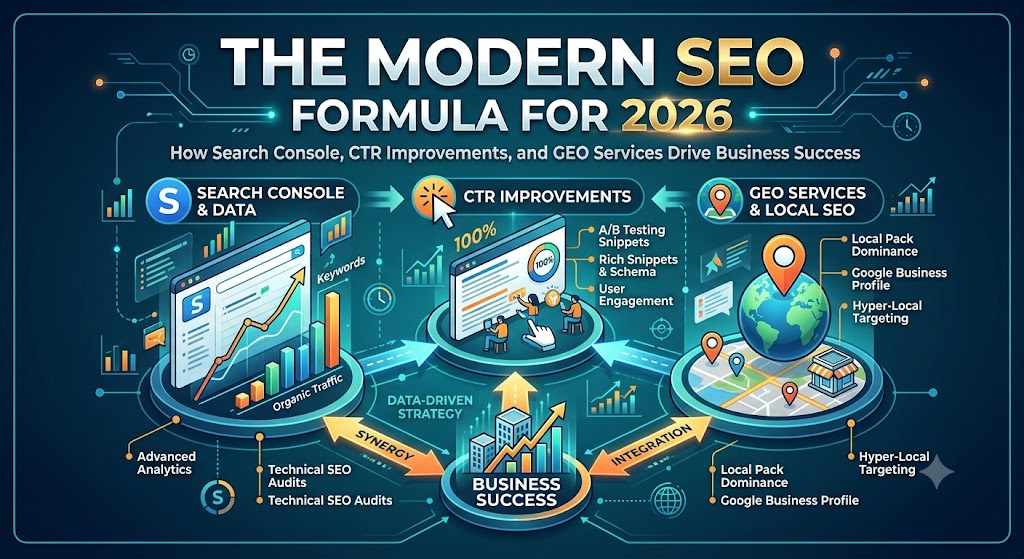
SEO in 2026 is more advanced, data-driven, and user-focused than ever before. Businesses seeking long-term growth must adopt strategies that combine technical excellence, high-quality content, CTR optimisation, and effective GEO services.
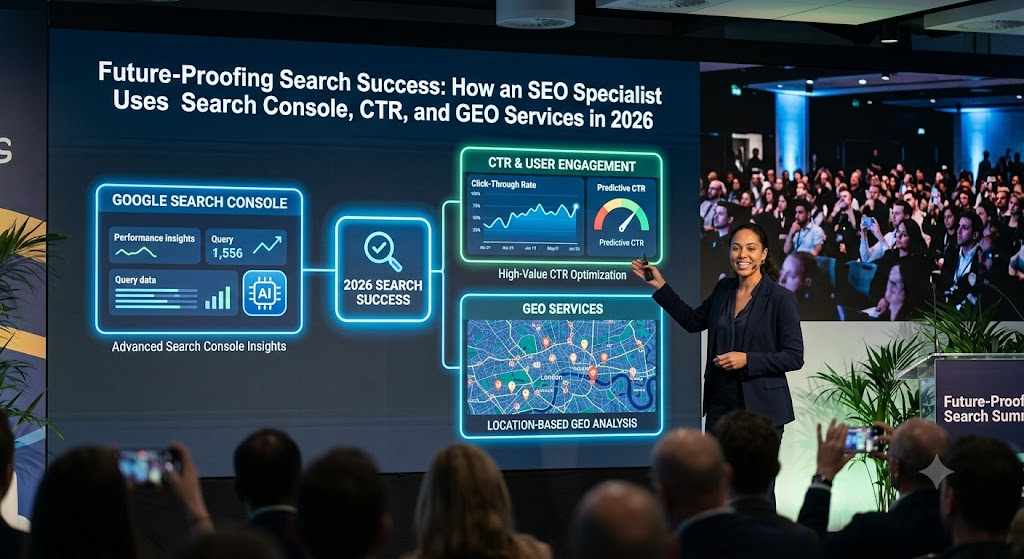
A skilled search engine optimisation professional uses tools such as Search Console to uncover opportunities, improve website performance, and maximise results across search platforms. By adopting these modern SEO practices, businesses can attract more qualified visitors, strengthen their online authority, and achieve sustainable success in an increasingly competitive digital marketplace.




Write a comment ...