
Introduction: SEO Has Entered the Intelligence Era
Search in 2026 is no longer driven only by keywords and backlinks. It is powered by artificial intelligence systems that interpret meaning, predict intent, and personalise results based on user behaviour and location. This shift has transformed SEO into a discipline focused on building intelligent search systems rather than simple ranking strategies. A modern SEO specialist plays a key role in designing these systems to ensure long-term visibility and performance.
The SEO Specialist as a System Builder
The SEO specialist of today is not just an optimiser but a system builder. Their work involves creating structured content ecosystems, improving technical performance, and aligning digital assets with AI-driven search algorithms. They analyse how users interact with search results and design strategies that improve visibility across multiple search layers. Their focus is on building sustainable organic growth rather than short-term ranking gains.
Search Console: The Real-Time SEO Intelligence Hub
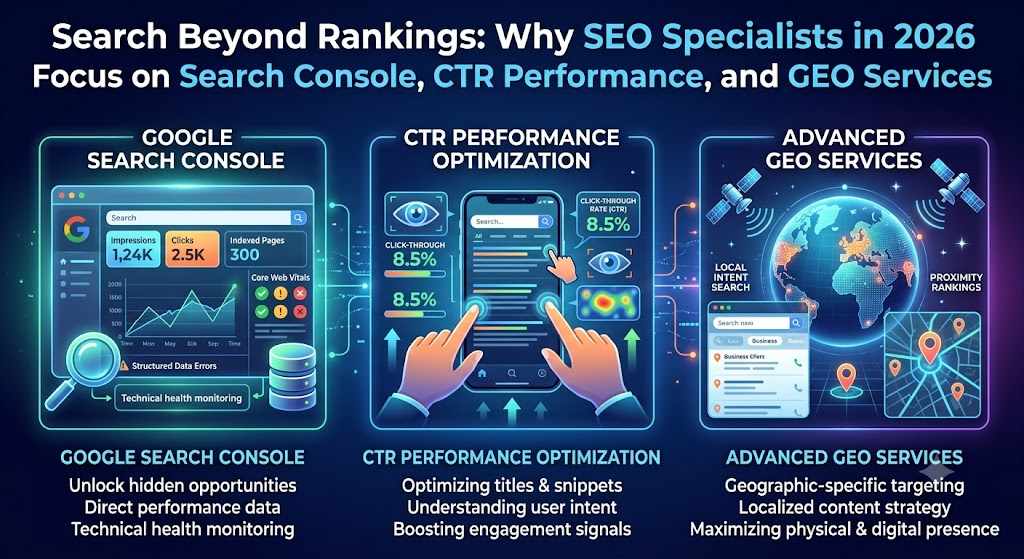
Google Search Console remains one of the most powerful tools for understanding how websites perform in real search environments. It provides critical data on impressions, clicks, indexing status, and search queries. SEO specialists rely on this platform to evaluate performance and detect both opportunities and issues. It acts as a real-time intelligence hub that connects search engine behaviour with website performance.
Using Search Console to Drive Strategic Optimisation
Search Console data allows SEO specialists to identify patterns in user behaviour. Pages that receive high impressions but low clicks indicate a need for CTR improvement. Keywords with rising impressions signal emerging opportunities for new content. Technical issues such as crawl errors or indexing delays can be addressed before they impact rankings. This continuous feedback loop enables data-driven SEO decisions.
CTR Strategy: Converting Visibility into Action
Click-Through Rate (CTR) is a critical metric in modern SEO because it determines how effectively search impressions convert into traffic. High rankings alone do not guarantee engagement. Users must be motivated to click on a result. For this reason, CTR strategy has become a central focus for SEO specialists aiming to maximise organic performance.
How CTR Optimisation Works in Practice
SEO specialists improve CTR by refining how search listings communicate value. Titles are crafted to match user intent while encouraging curiosity or urgency. Meta descriptions reinforce relevance and provide clear expectations. Structured data enhances listings with rich features such as FAQs, ratings, and additional details. These improvements make search results more attractive and increase engagement rates.
GEO Targeting: Precision in Modern Search Visibility
Search engines now prioritise geographic relevance when delivering results. A strong GEO strategy ensures that content aligns with the location-based intent of users. Whether targeting local customers or global markets, GEO optimisation helps businesses appear in the most relevant search results. This improves both visibility and conversion quality.
Why GEO Strategy Improves Search Efficiency
GEO targeting allows businesses to focus on high-intent audiences in specific locations. SEO specialists create localised landing pages, optimise regional keywords, and maintain consistency across business listings and directories. They also analyse regional search behaviour to tailor content more effectively. This ensures that businesses attract users who are more likely to convert based on geographic relevance.
AI Search Optimisation: Preparing for Machine-Led Discovery
Artificial intelligence has fundamentally changed how search engines interpret and rank content. Instead of relying on keyword matching alone, AI systems analyse meaning, structure, context, and authority signals. This makes AI search optimisation essential for modern SEO success. Content must now be designed for both human readers and machine interpretation.
Building Content for AI Understanding
SEO specialists create AI-ready content by structuring it into topic clusters that cover subjects in depth. Each page is designed to answer related questions comprehensively while maintaining clarity and logical flow. Semantic relationships, internal linking, and schema markup help AI systems understand content context and relevance. This increases the chances of inclusion in AI-generated summaries and search features.
Integrating SEO Components into a Unified Framework
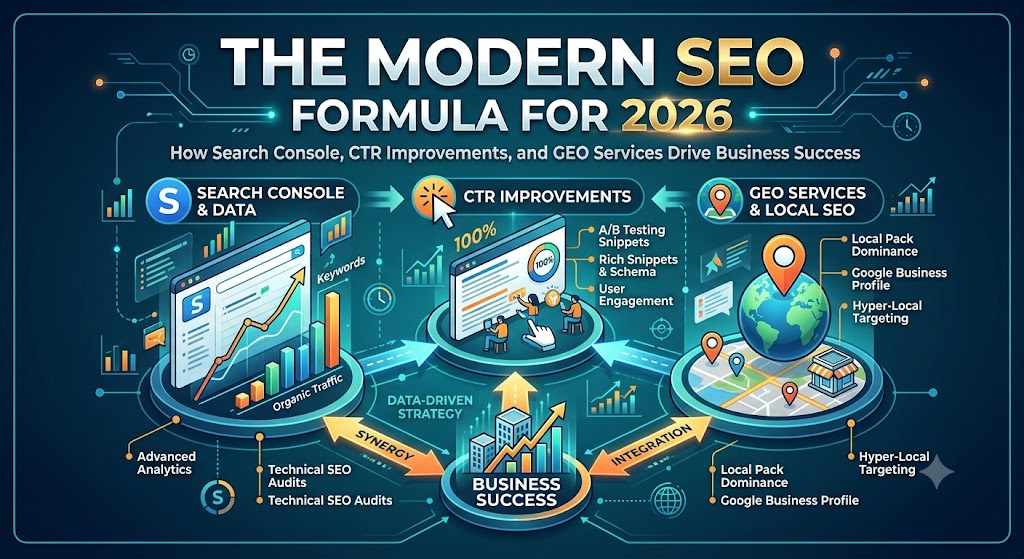
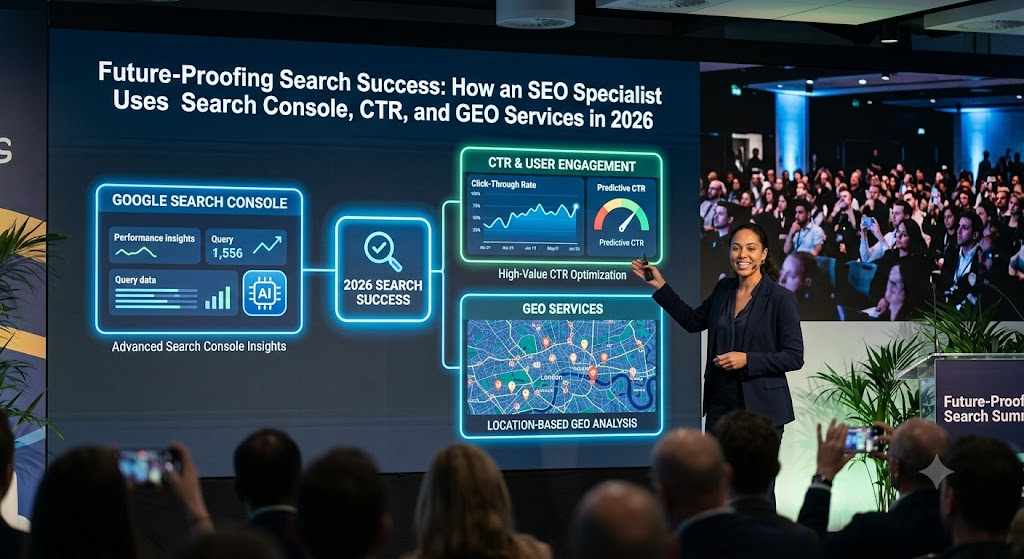
The most successful SEO strategies combine multiple components into a unified system. Search Console provides performance intelligence, CTR strategy improves engagement, GEO targeting ensures geographic relevance, and AI search optimisation prepares content for future search evolution. Together, these elements create a scalable framework for sustainable organic growth.
SEO as an Adaptive Intelligence System
SEO in 2026 is no longer static—it is adaptive, predictive, and intelligence-driven. Businesses that succeed treat SEO as a continuously evolving system rather than a one-time task. A skilled SEO specialist is essential for designing and managing this system to ensure long-term visibility and performance.
Final Words
The future of SEO belongs to organisations that combine data-driven insights with user-focused strategy. By leveraging Search Console intelligence, optimising CTR strategy, implementing GEO targeting, and embracing AI search optimisation, businesses can build a resilient and future-ready search presence. Those who adapt to this intelligence-driven ecosystem will not only remain visible—they will lead it.





Write a comment ...